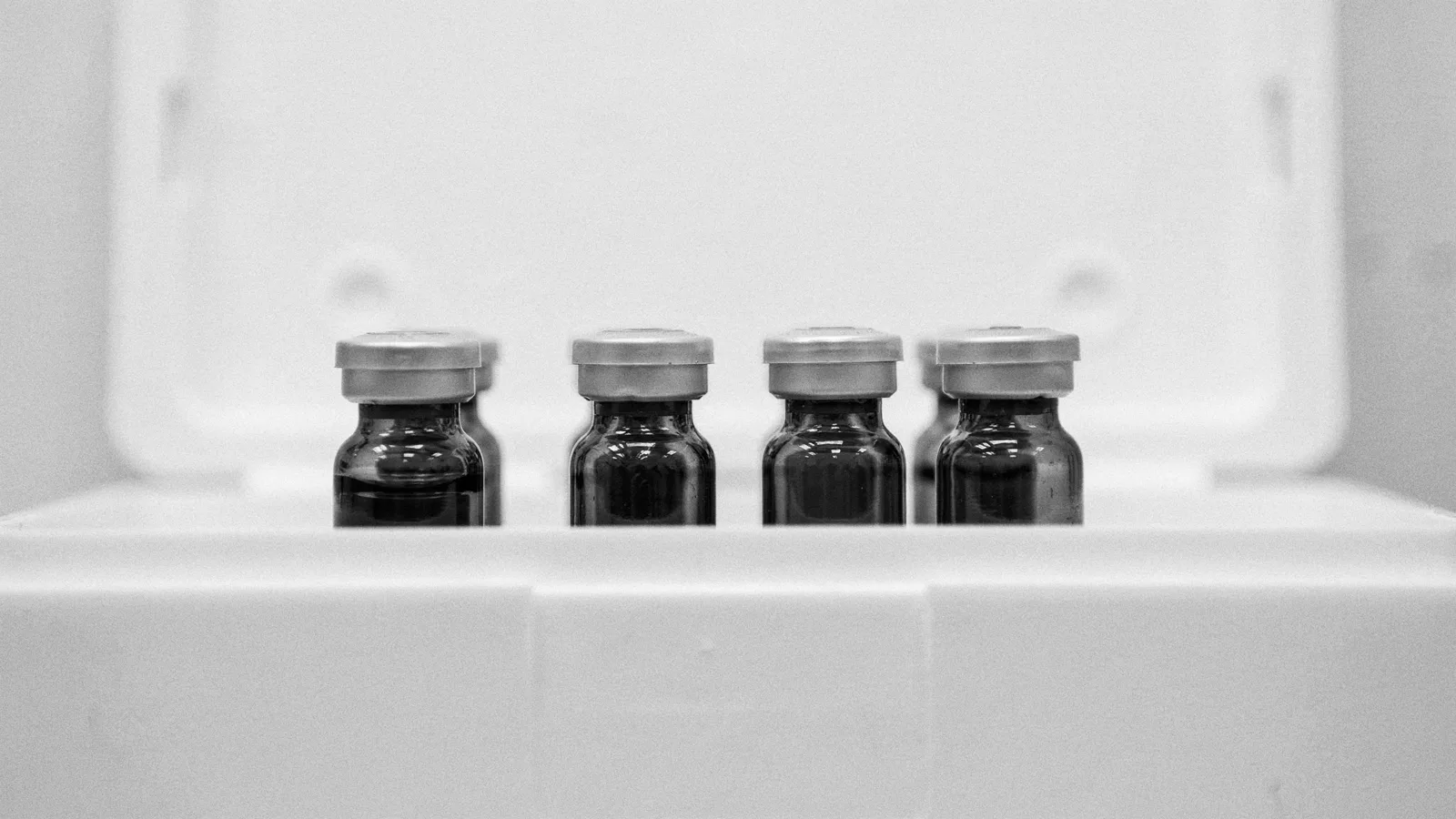
A lyophilized reference material arrives as a dry cake or powder in a sealed vial, and it is tempting to think the hard part is over. Freeze-drying removes most of the water that drives hydrolysis and microbial growth, so the solid is far more stable than a solution. It is not indefinitely stable. Heat, light, moisture and repeated temperature cycling all still act on it, slowly, and the damage rarely shows until an assay drifts or a purity check comes back lower than the certificate of analysis.
The practical question for any laboratory or supplier is simple: what conditions keep a lot matching its certificate for as long as possible, and what records prove those conditions were held? This article walks through the five variables that matter most and the habits that control them.
Temperature: follow the label, then protect it
The first rule is the least glamorous. The storage condition printed on the vial label and stated on the certificate of analysis is the condition the stability data supports. If the document says store at or below minus 20 °C, that is the requirement, and a colder freezer is usually acceptable while a warmer one is not. Many laboratories keep long-term stock of dry research peptides and similar materials at minus 20 °C or minus 80 °C, with a working vial held separately so the main stock is disturbed as little as possible.
Three details decide whether a freezer actually delivers the temperature on its display:
- Freezer type. Frost-free (auto-defrost) freezers periodically warm their coils to melt ice. Items near the walls can see repeated small temperature swings. Manual-defrost units hold a steadier temperature and are the usual choice for reference stock.
- Placement. The door shelves and the area near the door see the largest excursions every time the unit is opened. Store reference vials in closed boxes toward the back and middle.
- Monitoring. A calibrated data logger with a probe, ideally in a buffered bottle, records what the material experienced rather than what the air sensor briefly read. Calibration traceable to a national metrology institute, such as NIST in the United States, lets the reading stand up in an audit.
An excursion is not automatically a lost lot, but it must be recorded: the unit, the duration, the peak temperature and which lots were inside. The decision about whether the material is still fit for purpose belongs to whoever owns the stability data, and it should be written down with the reasoning.
Light: amber glass and closed boxes
Many organic molecules absorb ultraviolet and short-wavelength visible light, and the energy can break bonds or start oxidation. Aromatic residues and certain functional groups are especially sensitive. Photodegradation in the solid state is usually slower than in solution, but a vial left on a bench under fluorescent light for days, or stored in a clear box in a glass-door refrigerator, accumulates exposure.
The controls are straightforward. Amber glass filters much of the damaging range. Opaque secondary boxes or foil wraps add protection for clear vials. Handling under ordinary room light for the few minutes needed to weigh or inspect a vial is generally acceptable unless the certificate says otherwise. For formal work, the ICH Q1B guideline describes how photostability testing is designed, and it is a useful reference for understanding why a supplier specifies light protection even when the label only says "protect from light".
Humidity: the hidden variable
A lyophilized cake is porous and often hygroscopic. It was dried to a low residual moisture on purpose, and it will pull water from the air whenever it gets the chance. Absorbed moisture lowers the glass transition temperature of the solid, speeds chemical degradation, and can collapse or clump the cake. It also changes the mass of material per milligram weighed, which quietly shifts every concentration calculated from that weighing.
The single most important habit is equilibrating a cold vial to room temperature before opening it. A vial taken from minus 20 °C and opened immediately draws in room air, and the moisture in that air condenses on the cold solid. Leave the sealed vial in a desiccator or on the bench, still closed, until it reaches room temperature. For small vials this commonly takes around half an hour; larger containers need longer. Wipe away any external condensation before breaking the seal.
Other humidity controls:
- Open vials for the shortest practical time, and reseal them promptly with the original closure.
- Where available, blanket the headspace with dry nitrogen or argon before resealing a partly used vial.
- Wrap the closure with laboratory film for long-term storage if the supplier's procedure allows it.
- Never store dry reference material in a frost-free refrigerator door or next to an ice-making source.
Desiccants: choosing and maintaining them
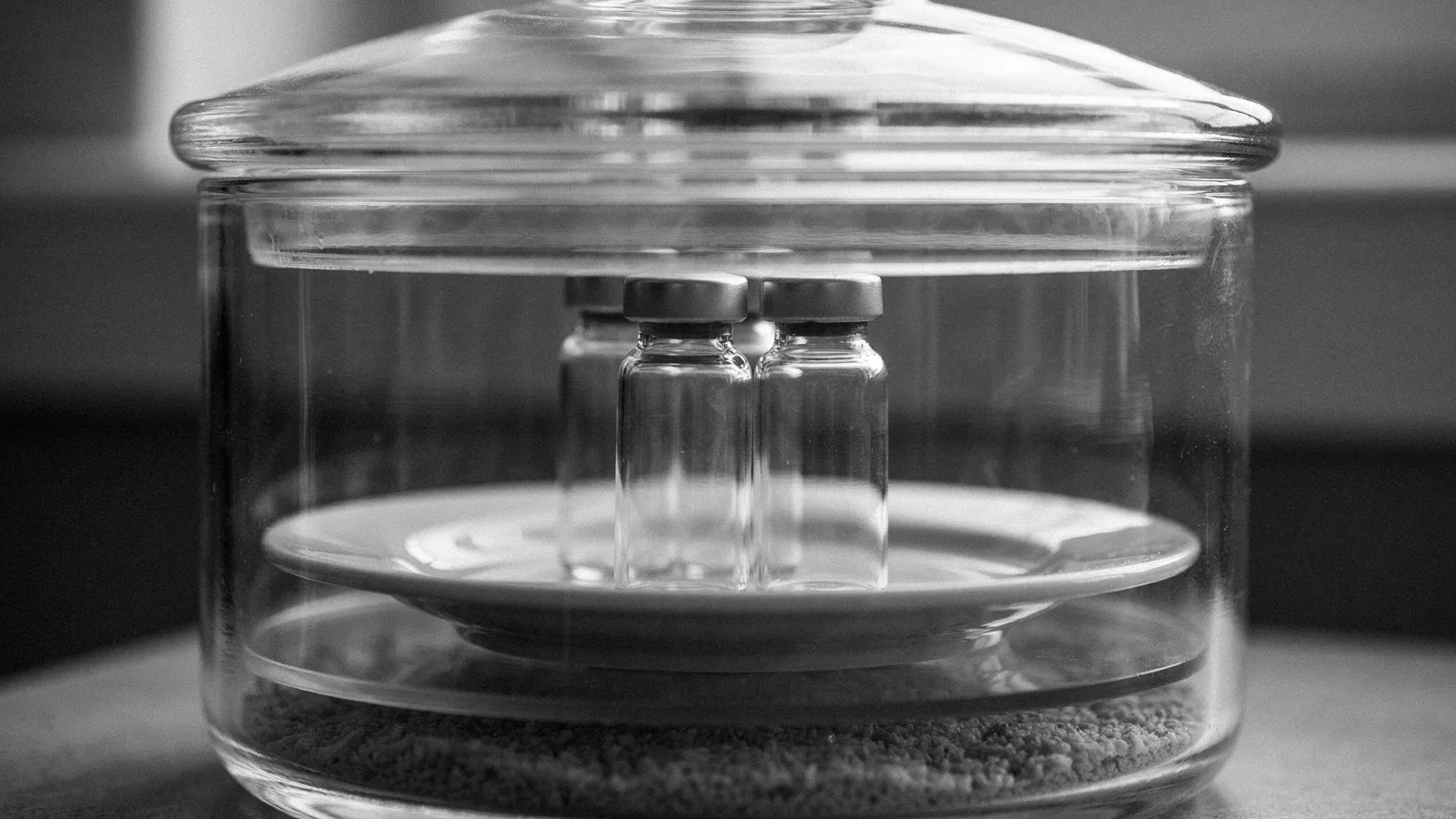
A desiccator or a sealed secondary container with desiccant gives the vial a dry microenvironment, which matters most during warm-up and for containers that will be opened repeatedly. Common choices include:
| Desiccant | Typical use | Maintenance |
|---|---|---|
| Silica gel | General-purpose drying in desiccators and secondary containers | Regenerate by oven drying or replace when the indicator changes color |
| Molecular sieves | Very low humidity targets and sealed pouches | Regenerate at high temperature according to the manufacturer's instructions |
| Calcium sulfate | Bench desiccators where a neutral, inexpensive agent is enough | Regenerate by heating or replace on a schedule |
Indicating silica gel changes color as it saturates, which makes status visible at a glance. Older indicator formulations used cobalt chloride, which is classified as a hazardous substance under the GHS; many laboratories now use cobalt-free indicators, and whichever is used should have its safety data sheet on file. A desiccant that is never checked is decoration. Put the check on a written schedule, record the date it was regenerated or replaced, and keep a humidity indicator card inside sealed containers so the internal condition can be read without opening them.
Freeze-thaw discipline and aliquoting
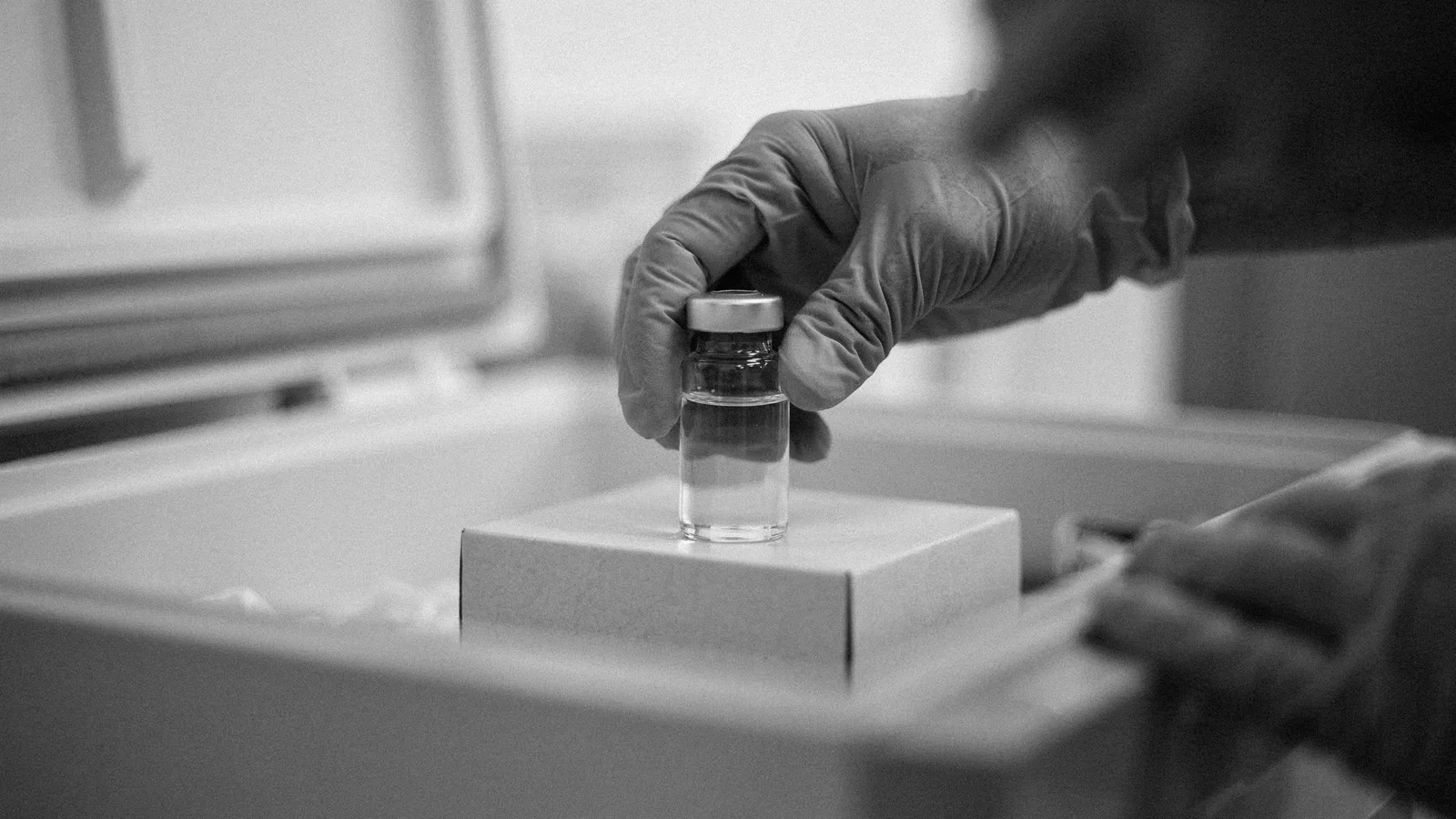
Each time a vial moves from the freezer to the bench and back, it goes through a warm-up and cool-down and usually a moisture exposure. Dry solids tolerate this better than frozen solutions, but the effects add up. The most reliable control is to handle the stock as few times as possible.
- Aliquot on receipt when the procedure allows. Dividing a larger quantity into single-use portions under dry conditions means each portion is warmed and opened once.
- Keep a working vial separate from the reference stock. The stock stays frozen and undisturbed; the working vial absorbs the day-to-day handling.
- Log every removal. A simple sheet or electronic record with date, time out, time returned and initials turns an invisible history into an auditable one.
- Retire by criteria, not by feel. Set a maximum number of openings or a maximum time in use for a working vial, based on the supplier's data or the laboratory's own verification.
Label each aliquot with the parent lot number, the date it was prepared and the storage condition, so a portion found at the back of a freezer years later can still be traced to its certificate. Material dissolved for an analytical run is a separate case with its own, usually much shorter, stability window, and it should not be returned to the dry stock box.
Records that make storage verifiable
Good storage that is not documented looks identical, to an auditor, to storage that never happened. Laboratories working under ISO/IEC 17025 are expected to handle, store and protect test items and reference materials in a way that preserves their integrity, and the same logic applies to any supplier describing storage conditions on a lot page. At minimum, keep the certificate of analysis with the stated storage condition, the temperature log for the unit where the lot lives, the desiccant maintenance record and the removal log for each working vial. For more on how certificates are structured, see the ruogate blog.
Checklist
- Confirm the storage temperature on the label and certificate, and store at or below it.
- Use a manual-defrost freezer for reference stock, away from the door, with a calibrated logger.
- Keep vials in amber glass or opaque boxes.
- Warm sealed vials to room temperature before opening, and reseal promptly.
- Maintain desiccants on a written schedule and record each change.
- Aliquot where appropriate, keep stock and working vials separate, and log every removal.
- Record every temperature excursion with the affected lots and a written disposition.